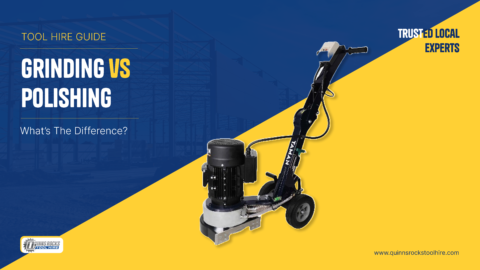
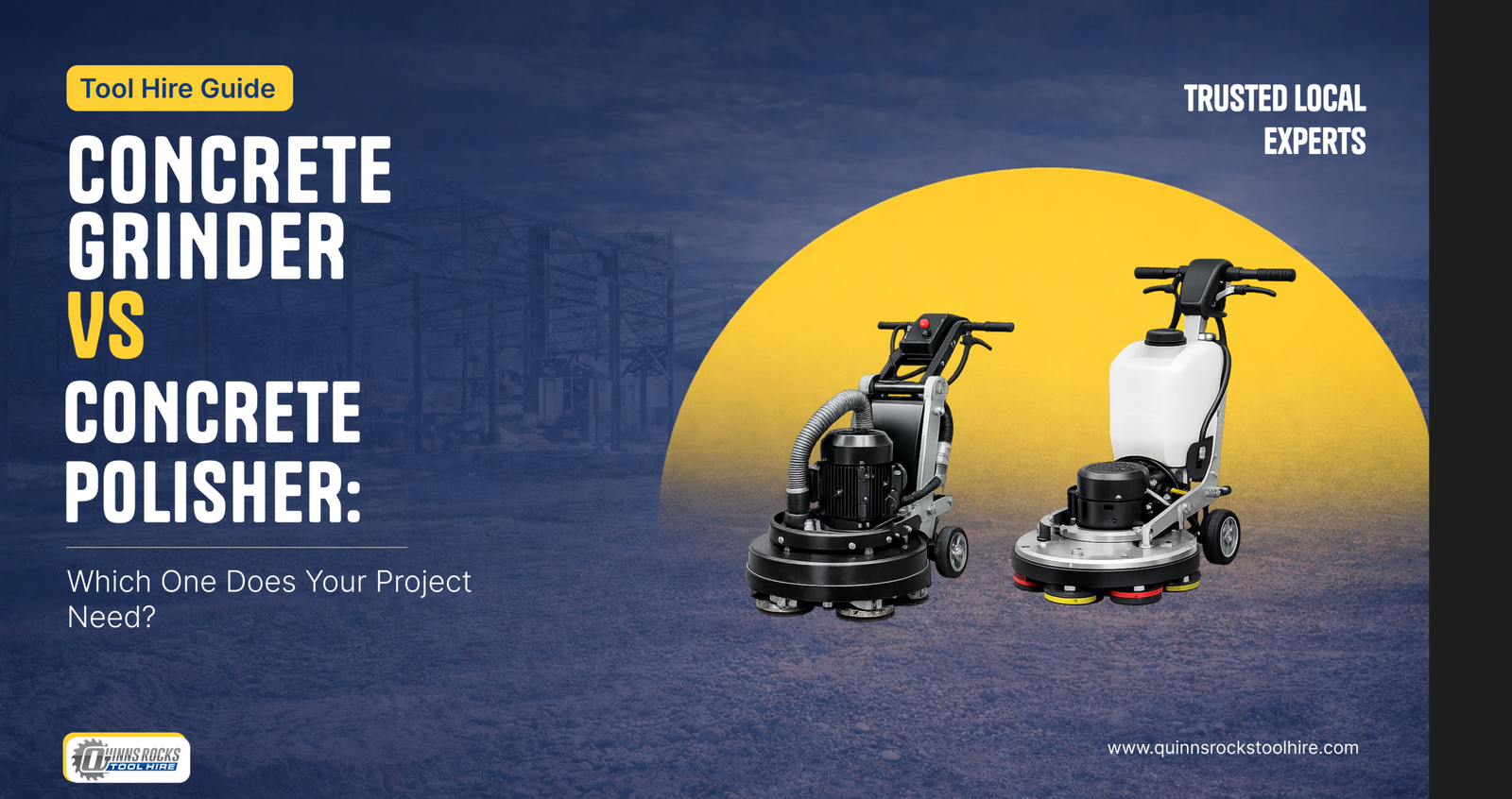
Concrete Grinder vs Polisher is one of the most common questions Perth homeowners and tradies ask before starting a flooring project. Standing in front of a concrete slab trying to decide which one to hire? The fastest way to answer that isn’t by comparing the machines — it’s by looking at your project.
If you’re standing in front of a concrete slab trying to decide whether to hire a grinder or a polisher, the fastest way to answer that question isn’t by comparing the machines — it’s by looking at your project. What does your floor look like right now, and what do you want it to look like when you’re done? That answer tells you exactly which piece of equipment to book.
This guide walks through real project scenarios so you can match your job to the right hire, without wasting money on the wrong equipment or making a second trip to fix a mismatched choice.
Why This Decision Trips People Up
Most people searching for grinder vs polisher hire aren’t actually confused about what the machines do in a general sense — they’re unsure which category their specific job falls into. The two tools sound similar, both work on concrete surfaces, and both use diamond abrasives, so it’s easy to assume they’re interchangeable. They’re not. One removes material, the other refines it, and using the wrong one wastes both time and hire cost.
So instead of starting with technical definitions, let’s start with the floor in front of you and work outward from there.
Scenario 1: Your Slab Has Old Paint, Glue, or a Coating on It
You need a grinder. Grinding is the only way to physically remove material bonded to the surface. No amount of polishing will strip old paint or adhesive — polishing pads are too fine for that job and will wear out fast trying to do work they’re not designed for. If your slab has years of built-up coating, paint, or glue residue, grinding is the non-negotiable first step regardless of what your end goal looks like.
Scenario 2: Your Slab Is Uneven, Bumpy, or Has High and Low Spots
You need a grinder. Levelling a surface requires material removal, which is exactly what a grinder is built for. This is common in older garages, sheds, or outdoor slabs that have shifted, cracked, or weathered over time. Trying to polish an uneven surface simply polishes the unevenness — it doesn’t correct it.
Scenario 3: You’re Prepping a Floor for Epoxy Coating
You need a grinder — but not a polisher. Epoxy needs a clean, slightly textured surface to bond to properly. A polished surface is actually too smooth for epoxy adhesion and can cause the coating to peel or fail early. Grinding creates the right surface profile for epoxy to grip, so this is the correct and only step here.
Scenario 4: Your Floor Is Already Flat and Smooth, but Looks Dull or Scratched
You need a polisher. If there’s no material to remove and no unevenness to correct, you’re in finishing territory rather than surface-prep territory. A polisher will bring back shine and smooth out light surface wear without changing the shape or level of the slab.
Scenario 5: You Want a Showroom-Style Glossy Concrete Floor From Scratch
You need both — a grinder first to level and prepare the raw surface, followed by a polisher run through progressively finer diamond pads to build up the final sheen. This is the most common combination for retail spaces, warehouses, and feature garage floors, and it’s usually a multi-stage process rather than a single pass.
Also Check: Grinding vs Polishing: The Ultimate Guide to the Real Difference
Why Getting This Wrong Costs You Time and Money
Hiring a polisher for a job that actually needs grinding is one of the most common — and costly — mistakes we see. The polishing pads wear down quickly trying to do a grinder’s job, the surface still isn’t level or clean afterward, and you end up booking a second hire anyway. In the opposite direction, using a grinder when only light polishing was needed can leave a surface rougher than intended, requiring extra finishing work to correct. Getting the equipment right the first time saves you a repeat trip, repeat hire cost, and a longer project timeline than necessary.
Also Check: The Difference Between Demo Saws and Concrete Saws
Indoor or Outdoor? It Affects Your Equipment Choice Too
Beyond the grinder vs polisher decision, where your slab is located changes how you’ll run the machine. Indoor jobs usually call for dry grinding or polishing with dust extraction, since water management is harder inside a garage, warehouse, or building. Outdoor slabs give you more flexibility to use wet methods, which control dust more effectively and can extend the life of diamond pads over a larger job.
Also Check: Wet Cutting vs Dry Cutting Concrete
What to Tell Us When You Call to Book
To get matched with the right equipment on the first call, have these details ready: the current condition of your slab (coated, uneven, or already smooth), the size of the area in square metres, your desired end result (level surface, epoxy-ready, or polished shine), and whether the job is indoor or outdoor. This alone is usually enough for our team to recommend the exact grinder, polisher, or combination you need — you can also browse our concrete equipment range beforehand to get a sense of what’s available before you call.
A Quick Decision Checklist
- Is there something ON the surface that needs to come off? → Grinder
- Is the surface uneven or bumpy? → Grinder
- Are you prepping for epoxy? → Grinder
- Is the surface already flat but needs shine? → Polisher
- Are you going from raw concrete to a glossy finish? → Grinder, then Polisher
Keep this checklist handy when assessing your slab — most projects fall clearly into one category once you’ve answered these five questions honestly.
Also Check: Concrete Grinder and Saw Hire in Alkimos and Butler
How Diamond Pad Grit Affects Your Result
Both grinders and polishers use diamond abrasives, but the grit level makes a big difference to the outcome. Coarse grits (used mainly in grinding) remove material fast and are ideal for levelling and stripping coatings. Medium grits bridge the gap between removal and refinement. Fine grits (used in polishing) don’t remove material — they burnish the surface to build shine in stages, often moving through three or four progressively finer pads to reach a high-gloss finish. If you’re doing a full grind-and-polish job, expect the polishing stage to involve multiple pad changes rather than a single pass.
Safety Notes for Both Equipment Types
Grinding and polishing both produce fine concrete dust containing crystalline silica, a known respiratory hazard. Always use dust extraction or wet suppression, wear a properly fitted respirator, and use hearing and eye protection regardless of which machine you’re using. Ensure the work area is well ventilated if working indoors, and take regular breaks if the job spans a full day. Our team runs through these safety points with you at handover for every hire, so you’re set up correctly from the start.
Hiring vs Buying for a One-Off Job
Unless you’re doing this kind of work regularly, buying a grinder and polisher outright rarely makes sense. Professional-grade machines in this category represent a significant investment for something most homeowners and even many tradies only need once or twice. Hiring means you get the correct machine for each stage of the job — coarse grinding, then fine polishing — without paying to own and store equipment that sits unused between projects. Explore our full range of equipment on the homepage to see everything available beyond concrete tools too.
Frequently Asked Questions
Can I skip grinding and go straight to polishing to save time?
Only if your surface is already level and free of coatings. Skipping grinding on a rough or coated surface will damage polishing pads and won’t achieve the result you want, often costing more in the long run.
Do I need a different machine for a small garage vs a large warehouse floor?
Yes — smaller handheld or compact grinders work well for tight spaces, while larger walk-behind machines are more efficient and cost-effective for bigger open areas. Our team can recommend the right size based on your square metreage.
Is one visit enough for a full grind-and-polish job?
For most residential and small commercial jobs, yes — though larger or heavily coated floors may need a longer hire period to complete both stages properly and allow for multiple pad changes.
Can I hire both a grinder and polisher at the same time?
Yes, and for full grind-and-polish jobs this is usually the most efficient approach, since you’ll move directly from the grinding stage into polishing without waiting on a second hire.
Final Thoughts
The grinder vs polisher decision isn’t really about comparing two machines side by side — it’s about correctly identifying what stage your project is at right now. Match the equipment to your slab’s current condition and your end goal, and the rest of the job falls into place. Whether you need a grinder to strip and level, a polisher to refine and shine, or both in sequence for a full showroom finish, getting the right equipment on day one saves time, money, and unnecessary hassle.
Ready to book the right equipment for your project? Reach out through our contact page and our team will help you choose between a grinder, a polisher, or both.