Compactor hire Perth jobs come down to one decision: matching the size of the plate compactor to the surface you’re building. As a rule of thumb, a light plate compactor (up to about 90kg) suits pavers, paths and patios, a medium unit (roughly 90kg to 150kg) suits most residential driveways and bases, and a heavy-duty or reversible plate (150kg and above) is for deep bases, large areas and trenches.
Get the size wrong and you either spend all day making endless passes with an underpowered machine, or you hire more machine than you can safely move around. Get the base wrong and pavers sink, driveways dip, and you’re pulling it all up again within a year or two.
This guide explains each plate compactor size, what pavers and driveways actually need underneath them, how many passes and layers to plan for, and what to check before you book plate compactor hire.
What Is a Plate Compactor and What Does It Do?
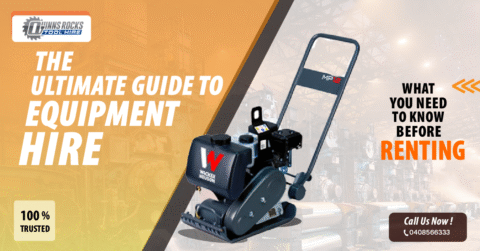
A plate compactor is a machine with a heavy steel base plate that vibrates rapidly, usually driven by a petrol engine (electric and battery models also exist). That vibration forces soil, sand and crushed rock particles tightly together and squeezes out the air gaps between them, leaving a dense, stable base that won’t settle under load.
Pavers, concrete and asphalt all sit on top of that base, so the quality of the compaction decides how long the finished surface stays flat. A poorly compacted base is one of the most common reasons for sunken pavers, uneven driveways and cracked edges.
How a Plate Compactor Works in Simple Terms
The engine spins an eccentric weight that makes the plate vibrate. The vibration lets the material underneath settle and lock together, while the machine’s own weight and forward motion pull it steadily across the surface. Heavier machines with more vibration force reach deeper in each pass, which is why size matters so much.
Plate Compactor Sizes Explained
Plate compactors are generally sorted by weight and plate width. A heavier machine delivers more compaction force, so it can compact thicker layers of material per pass, but it’s also harder to transport and manoeuvre.
Light-Duty Plate Compactors (Up to About 90kg)
Light units are the go-to for pavers, footpaths, patios, garden paths and small base preparation jobs. They’re easy to load, fit through narrow side access and are gentle enough to use with a paver mat for the final settling pass. The trade-off is shallower compaction, so you’ll need thinner layers of base material and more passes. Our MP12 65kg compactor, for example, suits paths, patios and smaller paving areas.
Medium Plate Compactors (Roughly 90kg to 150kg)
Medium machines are the all-rounder for most residential work. They handle driveway bases, carport and shed pads, large paved areas and general backfilling, compacting thicker layers than a light unit while still being manageable for one or two people to transport. If you’re unsure which size to choose, medium is the safest starting point for most driveway jobs.
Heavy-Duty and Reversible Plate Compactors (150kg and Above)
Heavy plates are built for large driveways, commercial car parks, deep road base and trench work. Reversible models can travel forwards and backwards, which makes them useful in confined spaces and trenches. They deliver the deepest compaction but are heavy to move, so plan for ramps, a suitable vehicle and two people to load and unload.
| Size | Typical Weight | Best For | Pavers | Driveways |
|---|---|---|---|---|
| Light-duty | Up to about 90kg | Paths, patios, small paving | Yes | Not recommended |
| Medium | 90kg to 150kg | Driveway bases, pads, large paved areas | Yes | Yes, most residential |
| Heavy-duty / reversible | 150kg and above | Large driveways, deep base, trenches | Usually more than needed | Yes, large or heavy-load |
Petrol, Electric or Battery: Which Power Type?
Petrol plate compactors are the standard for hire because they’re powerful, portable and don’t depend on a power outlet. Electric models run quieter and suit enclosed or noise-sensitive sites, but they need a nearby power source and are usually lighter-duty. Battery units are convenient for small jobs, though run time and compaction force are limited compared with petrol.
For most Perth pavers and driveway jobs, petrol is the practical choice, which is why it’s the type most people end up hiring.
What Size Plate Compactor Do You Need for Pavers?
For pavers, a light or medium plate compactor does the job. The compactor does two separate tasks: it compacts the base before you lay anything, and it settles the pavers into the bedding sand once they’re down.
Paver Base Preparation Steps
- Excavate to the right depth and set your levels with a slight fall away from buildings for drainage.
- Compact the exposed sub-grade so you start on a firm surface.
- Add crushed rock or road base in layers, compacting each layer before adding the next. Foot-traffic areas commonly need around 100mm of compacted base.
- Screed a bedding layer of sand, generally around 25mm to 30mm, and don’t compact it before laying.
- Lay the pavers, then sweep fine sand into the joints.
- Run the plate compactor over the surface to settle the pavers and lock the joints, then sweep in more sand and repeat if needed.
Use a Paver Mat for the Final Pass
Running a bare steel plate over pavers can scuff, chip or crack them. A rubber or urethane paver mat fitted to the plate protects the surface. Ask about a paver mat when you book so it’s ready on collection day.
Cutting Pavers to Fit
Edges, curves and corners will need cut pavers, which calls for a masonry saw rather than a timber tool. Our comparison explains which tool suits your paving job.
Also Check: Brick Saw vs Angle Grinder: Which Tool to Hire in Perth?
What Size Plate Compactor Do You Need for a Driveway?
Driveways carry vehicle weight, so the base has to be deeper and more thoroughly compacted than a patio or path. A medium plate compactor is the minimum for most residential driveways, and a heavy-duty or reversible unit is worth considering for long driveways, heavier vehicles or deep base layers.
Base Depth and Layers for Driveways
Base depth depends on your soil, the loads the driveway will carry and the paving type. Driveways commonly need a considerably deeper compacted base than footpaths, often 150mm or more, built up in layers. Always follow your paver supplier’s specifications, an engineer’s advice or council requirements for your site. If your driveway extends over the verge or crossover, check with your local council before you start.
Compacting in Layers
Compact the base in thin layers, around 100mm at a time is a sensible guide, rather than tipping everything in at once. A thick layer only compacts at the top and stays loose underneath, which is exactly what leads to settling and dips later.
Also Check: The Best Tools for Granny Flat and Retaining Wall Construction Projects
How Many Passes Does Each Layer Need?
As a guide, plan on three to four overlapping passes per layer, working in straight lines and then crossing over at right angles. You’ll notice the plate start to bounce lightly and the sound change as the material firms up, which is the cue the layer is close to done. Overworking the surface can loosen it again, so avoid running the machine endlessly in one spot.
Base Materials and Moisture
Crushed rock, road base and recycled limestone are commonly used for bases around Perth. Many Perth properties sit on sandy soils, which compact well but need the right moisture to bind. Lightly dampen the material before compacting: bone-dry material won’t lock together, and saturated material turns spongy and won’t hold. A light spray and a quick squeeze test (it should hold together without dripping) is a practical check.
When a Plate Compactor Isn’t Enough
Plate compactors work best on wide, open areas. Narrow trenches, tight corners and cohesive clay soils are often better handled by a rammer, which delivers concentrated impact force in a small footprint. Our guide explains which one suits your job.
Also Check: Compactor Hire Guide: Plate Compactor vs Rammer
Transporting and Handling a Plate Compactor
Even a light plate compactor is awkward to lift, and heavier units are not a one-person job. Plan how it will travel before collection day: a ute or trailer with a loading ramp, tie-down straps, and a second person to help load and unload. Keep the machine upright during transport so fuel and oil don’t leak, and secure it so it can’t shift on the road.
How Long Do You Need to Hire a Compactor?
A small patio or path can often be compacted in half a day, while a full driveway with several base layers may take a day or more once you allow for spreading material between passes. Quinns Rocks Tool Hire offers hire periods from 24 hours through to long-term, so you can match the hire to how your job is staged.
Also Check: Daily vs Weekly Hire
What to Check Before You Book Plate Compactor Hire
Having these details ready helps our team match you with the right machine:
- Area size in square metres
- Surface type: pavers, driveway, path or slab base
- Base depth and material
- Expected vehicle loads
- Site access, including gate and side-path width
- Whether you need a paver mat
- How you’ll transport the machine, including ramps and people to lift
- Fuel and return requirements
Safety Considerations
Plate compactors are heavy and vibrate hard, so protect yourself. Wear hearing protection, steel-capped boots, gloves and eye protection, plus a dust mask in dry conditions. Use a ramp and two people to load and unload rather than lifting the machine. For broader guidance on manual handling risks, Safe Work Australia publishes information on lifting, pushing and pulling manual tasks.
Before you dig, check for underground services through Before You Dig Australia, and keep the machine moving. Never leave it vibrating in one spot on pavers or a finished surface. Take regular breaks on longer jobs, since hand-arm vibration builds up over a full day.
Common Mistakes When Hiring a Compactor
- Compacting in one thick layer. Several thin layers always beat one deep one.
- Compacting bone-dry or waterlogged material. Get the moisture right first.
- Running a bare plate over pavers. Use a paver mat to avoid scuffing and chipping.
- Choosing a light machine for a driveway base. Underpowered compaction is the fastest route to settling.
- Forgetting edges and corners. These are the first areas to sink if skipped.
- Hiring for too short a period. Rushing the final layers undoes the work of the earlier ones.
Plate Compactor Hire vs Calling a Contractor
For patios, paths and smaller driveways, DIY with hired equipment can save a significant amount compared with a contractor. For large driveways, heavy vehicle loads or engineered bases, a contractor may be the safer call. Our guide helps you weigh up which route suits your project.
Also Check: Hiring Tools vs Calling a Tradie
Why Choose Quinns Rocks Tool Hire for Plate Compactor Hire
Quinns Rocks Tool Hire has supported Perth’s northern suburbs with reliable, well-maintained equipment for over 19 years, including Quinns Rocks, Mindarie, Alkimos, Butler and Clarkson. If you’ve been searching for compactor hire near me, our team can match you with the right plate compactor for your pavers or driveway and walk you through safe operation at handover.
You can browse our full range of plate compactor hire options, or explore everything else we have on the homepage if your project needs more than compaction.
Frequently Asked Questions
1. What size plate compactor do I need for pavers?
A light or medium plate compactor is usually enough. Use it to compact the base in layers and, with a paver mat fitted, to settle the pavers into the bedding sand.
2. What size plate compactor do I need for a driveway?
Medium is the minimum for most residential driveways. For long driveways, heavy vehicles or deep base layers, consider a heavy-duty or reversible plate compactor.
3. Can I compact pavers directly with a plate compactor?
Yes, but only with a rubber or urethane paver mat fitted to the plate. A bare steel plate can scuff, chip or crack pavers.
4. How thick should the base be under a driveway?
It depends on your soil, vehicle loads and paving type, but driveways typically need a deeper compacted base than footpaths. Follow your paver supplier’s specifications, engineering advice or council requirements.
5. Where can I find compactor hire near me in Quinns Rocks?
Quinns Rocks Tool Hire is based in Quinns Rocks and services Perth’s northern suburbs. Contact our team to check plate compactor availability for your dates.
6. Can I hire a compactor for just one day?
Yes. Hire periods run from 24 hours through to long-term, so you can choose what suits the size of your job.
7. Do I need a licence to operate a plate compactor?
No special licence is required for a standard plate compactor. Our team runs through safe operation and handling at handover.
Final Thoughts
Choosing the right compactor comes down to the surface you’re building. Light plates handle pavers and paths, medium plates suit most driveways, and heavy or reversible plates are for large areas and deep bases. Get the size, layers and moisture right, and your pavers or driveway will stay flat for years.
Ready to book? Get in touch through our contact page and our team will help you choose the right plate compactor for your project.