Plate Compactor vs Rammer – When you’re prepping ground for a slab, laying pavers, or backfilling trenches in Perth, compaction isn’t optional — it’s the foundation of everything that follows. Get it wrong, and you’re dealing with sinking pavers, cracked slabs, and costly rework down the track.
But here’s where most tradies and DIYers get stuck: plate compactor or rammer?
Both machines compact soil, but they work very differently — and using the wrong one for your job can waste time, money, and effort. In this guide by Quinns Rocks Tool Hire, we’ll break down exactly how each compactor works, when to use which, and how to choose the right one for your Perth project.
What Is a Plate Compactor?
A plate compactor (also called a vibratory plate or wacker plate) is a flat, heavy machine that vibrates at high frequency to compress granular materials like sand, gravel, and crushed limestone.
It works by spreading force across a wide, flat base plate — making it ideal for large, open areas where you need even, consistent compaction across the surface.
Plate compactors are best suited for:
- Paver and brick paving preparation
- Driveway and path sub-bases
- Compacting road base and crushed rock
- Levelling granular fill over wide areas
- Backfilling around shallow services
💡 Perth context: If you’re working with the sandy soils common across Perth’s northern suburbs — from Quinns Rocks to Joondalup and Butler — a plate compactor handles loose, granular ground efficiently.
Also Check: Brick Saw vs Angle Grinder: Which Should You Hire for Your Perth Project?
What Is a Rammer (Jumping Jack)?
A rammer — often called a jumping jack or trench compactor — uses a smaller, narrower foot that delivers high-impact blows to the ground. Instead of vibrating across a wide area, it pounds downward with concentrated force.
This makes rammers the go-to for cohesive soils (like clay) and confined spaces where a plate compactor simply can’t fit or won’t deliver enough downward force.
Rammers are best suited for:
- Trench backfilling (plumbing, electrical, drainage)
- Compacting clay and mixed soils
- Working alongside foundations and footings
- Tight areas between walls or formwork
- Deep fill compaction in layers
💡 Perth context: While Perth is known for sandy soils, many suburbs — particularly in the hills and older developments — have heavy clay or mixed soil profiles. Rammers handle these conditions far better than plate compactors.
Key Differences: Plate Compactor vs Rammer
Here’s how the two machines compare across the factors that matter most on a job site.
1. Soil Type Compatibility
- Plate Compactor: Works best on granular materials — sand, gravel, crushed rock, and road base.
- Rammer: Designed for cohesive soils — clay, silt, and mixed earth.
👉 Rule of thumb: If the soil sticks together when you squeeze it, use a rammer. If it crumbles apart, use a plate compactor.
2. Working Area
- Plate Compactor: Wide base plate covers large areas quickly. Ideal for open sites and broad surfaces.
- Rammer: Narrow foot fits into trenches, alongside foundations, and between obstacles.
👉 For open driveways and patio prep, go plate compactor. For service trenches and tight backfill, go rammer.
3. Compaction Force & Depth
- Plate Compactor: Delivers consistent surface compaction across a wide area, typically effective to around 200–300 mm depth per pass.
- Rammer: Delivers concentrated, high-impact force that penetrates deeper — typically effective to 300–400+ mm per pass.
👉 For deep trench backfilling, a rammer compacts more effectively per lift.
4. Manoeuvrability
- Plate Compactor: Easy to steer across flat, open ground but struggles in confined or uneven areas.
- Rammer: Designed for confined work — trenches, corners, and tight spots between structures.
👉 If access is restricted, a rammer is your only practical option.
5. Operator Effort
- Plate Compactor: Easier on the operator. Walk behind it, guide it, and let the vibration do the work.
- Rammer: More physically demanding. The jumping action requires the operator to hold on and guide each stroke.
👉 For long shifts on open ground, a plate compactor is far less fatiguing.
6. Speed & Productivity
- Plate Compactor: Covers ground much faster due to a larger base plate and continuous forward travel.
- Rammer: Slower per square metre but more thorough in confined or deep-fill situations.
👉 For surface area coverage, plate compactors win. For depth and precision in tight spaces, rammers are more productive.
Also Check: Generator Hire vs Buying: What Makes Sense in WA?
When Should You Hire a Plate Compactor?
A plate compactor is the right call when your project involves:
- Preparing sub-base for paving, driveways, or paths
- Compacting road base, sand, or gravel over open areas
- Levelling ground before laying concrete slabs
- General landscaping preparation on sandy Perth soils
- Any job on flat, accessible ground with granular fill
💡 Example Perth projects:
- Backyard paver installation in Quinns Rocks
- Driveway base preparation in Clarkson
- Granny flat slab prep in Butler
- Retaining wall base compaction in Joondalup
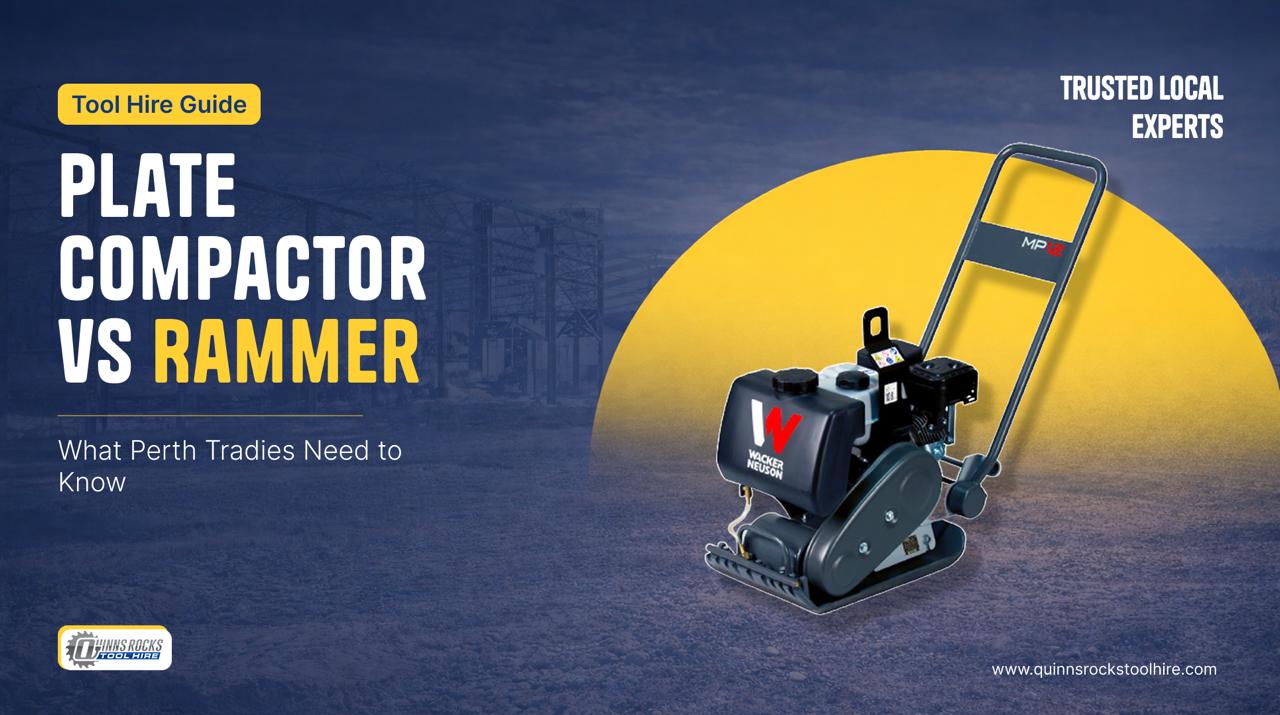
✅ Quinns Rocks Tool Hire stocks the MP12 65kg Compactor — a reliable plate compactor available for daily and weekly hire, perfect for residential and light commercial compaction work across Perth’s northern suburbs.
When Should You Hire a Rammer?
A rammer is the better choice when:
- You’re backfilling trenches for plumbing, electrical, or drainage
- The soil is clay, silt, or mixed earth (not granular)
- You’re compacting beside foundations, footings, or retaining walls
- Access is limited to narrow trenches or tight spaces
- You need deeper compaction per lift than a plate compactor can deliver
💡 Example Perth projects:
- Sewer and stormwater trench backfill
- Foundation prep on clay soils in Perth’s hills
- Compacting beside newly poured footings
- Narrow path or garden edging preparation
Plate Compactor vs Rammer: Quick Decision Guide
| Project Type | Best Tool |
| Paving or driveway sub-base | Plate Compactor |
| Trench backfilling | Rammer |
| Sandy or granular soil | Plate Compactor |
| Clay or cohesive soil | Rammer |
| Large open areas | Plate Compactor |
| Tight or confined spaces | Rammer |
| Retaining wall base prep | Plate Compactor |
| Beside foundations/footings | Rammer |
| Slab preparation | Plate Compactor |
| Deep fill (300mm+ lifts) | Rammer |
👉 Simple rule:
- Use a plate compactor for wide, sandy, granular work
- Use a rammer for deep, tight, clay-heavy work
Can You Use Both on the Same Job?
Absolutely — and experienced tradies often do. A common scenario on Perth building sites is using a rammer to backfill and compact service trenches, then switching to a plate compactor to finish the broader sub-base before paving or pouring.
If your project involves both trench work and surface preparation, hiring both machines for a day or two can save significant time and deliver a much better result than trying to make one tool do everything.
Compactor Hire Tips for Perth Tradies
Before you pick up your compactor, keep these practical tips in mind:
Compact in layers. Whether you’re using a plate compactor or rammer, always compact in lifts of 150–300 mm. Dumping a metre of fill and running over it once won’t achieve proper density.
Know your soil. Sandy Perth soils compact differently to clay. If you’re unsure what you’re working with, ask your equipment hire team for guidance on the right machine.
Add moisture if needed. Dry sand and gravel won’t compact properly. A light spray of water before compaction helps granular soils lock together.
Wear PPE. Compactors are loud and produce vibration. Hearing protection, steel-cap boots, and gloves are essential. Check out our PPE checklist for DIY jobs for a full rundown.
Check fuel and oil before starting. Our hire equipment is maintained and ready to go, but always do a quick pre-start check on site.
Also Check: Pressure Washer Hire in Quinns Rocks: What Size Do You Actually Need?
Why Hire a Compactor Instead of Buying?
For most Perth tradies and DIYers, hiring a compactor makes far more sense than buying one. Here’s why:
No upfront cost. A decent plate compactor costs $1,500–$3,000+ to buy. Hiring one for the day costs a fraction of that.
No maintenance headaches. Engine servicing, fuel system cleaning, base plate checks — that’s all on us when you hire.
Always the right machine. Need a plate compactor this week and a rammer next month? Hiring gives you access to the right tool for every job without filling your shed.
Pickup or delivery. Quinns Rocks Tool Hire offers same-day pickup from our store in Quinns Rocks, serving tradies across Butler, Clarkson, Joondalup, Mindarie, and the wider northern Perth corridor.
Hire a Compactor from Quinns Rocks Tool Hire
Whether you need a plate compactor for your next paving job or advice on the right compaction equipment for your site, Quinns Rocks Tool Hire has you covered.
✅ Browse our Compaction Equipment — available for daily and weekly hire
✅ Fair pricing with no hidden costs
✅ Local and reliable — proudly serving Perth’s northern suburbs with 19+ years of mechanical expertise
✅ Open 7 days — 8:00 AM to 6:00 PM
📞 Call us on 0408 566 333 or contact us online to book your compactor hire today.
FAQs | Plate Compactor vs Rammer
What’s the difference between a plate compactor and a rammer?
A plate compactor uses a wide, vibrating base plate to compress granular materials like sand and gravel across large areas. A rammer uses a narrow foot with high-impact blows to compact cohesive soils like clay in confined spaces such as trenches. The right choice depends on your soil type and working area.
Which compactor is best for sandy Perth soils?
For the loose, sandy soils common across Perth’s northern suburbs, a plate compactor is usually the best option. It vibrates granular particles into a dense, stable mass — perfect for paving prep, driveway bases, and slab sub-grades.
Can I use a plate compactor in a trench?
It depends on the trench width. Standard plate compactors are too wide for narrow service trenches. For trenches under 400–500 mm wide, a rammer is the practical and effective choice.
How deep can I compact in one pass?
Plate compactors typically compact effectively to 200–300 mm per pass. Rammers can reach 300–400+ mm per pass due to their concentrated impact force. Always compact in layers (lifts) rather than trying to compact deep fill in a single pass.
How much does compactor hire cost in Perth?
At Quinns Rocks Tool Hire, plate compactor hire starts from $55 per day or $275 per week. Contact us for current availability and pricing on rammers and other compaction equipment.
Do I need any experience to use a compactor?
Plate compactors are straightforward to operate — most DIYers can use one confidently after a quick briefing. Rammers require a bit more physical effort and control. Our team provides guidance on safe operation when you pick up your hire equipment.