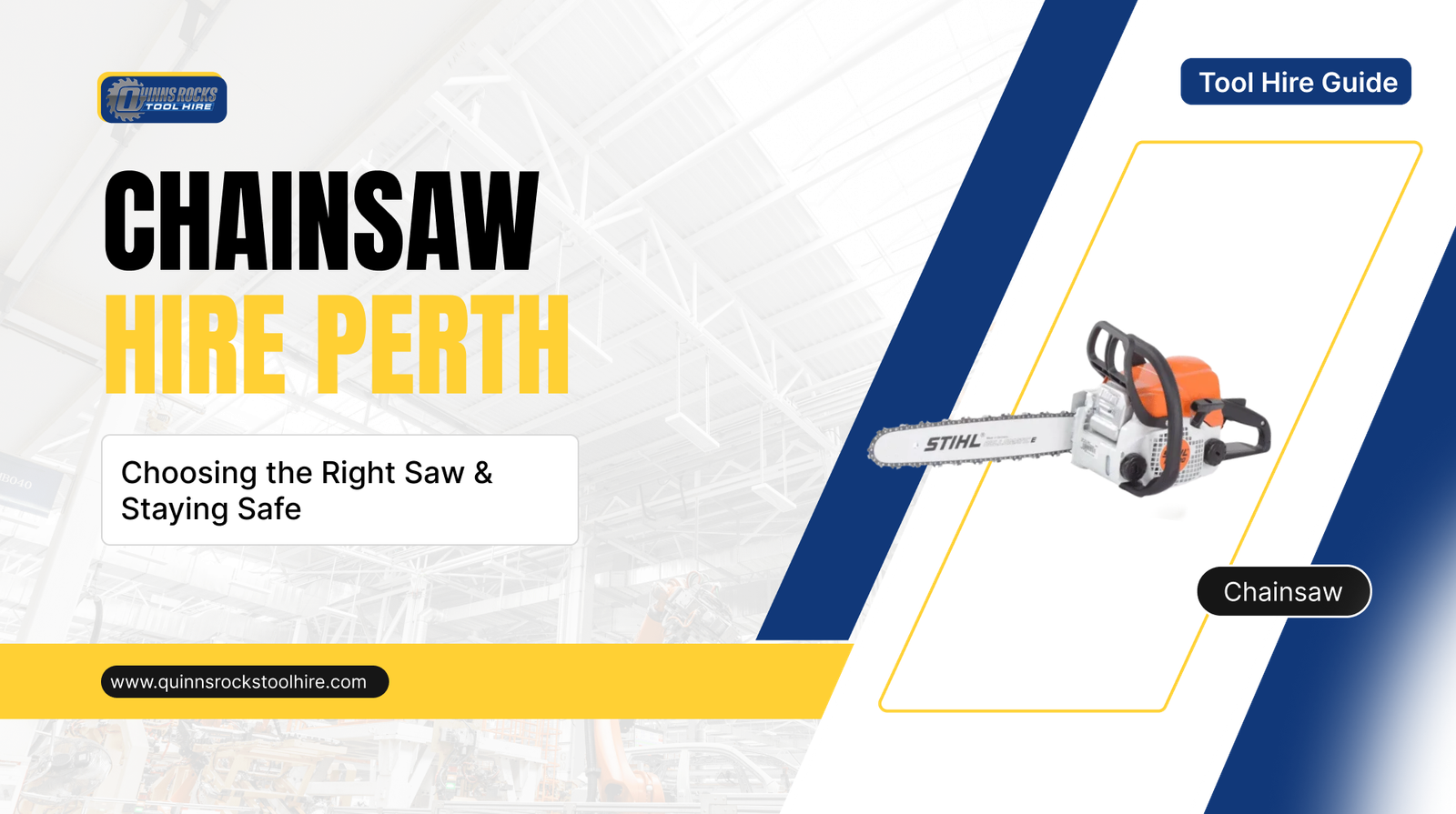
Chainsaw hire Perth jobs are usually pruning, storm clean-up, firewood and cutting up fallen limbs, and for most of them a petrol chainsaw with a 16 inch (40cm) bar is the right size. It’s light enough to control and strong enough for typical branches and small trunks. Wear chainsaw-rated leg protection, a helmet with eye or face protection, hearing protection, gloves and non-slip boots, never cut above shoulder height, and leave large trees, trees near powerlines and anything under tension to a qualified arborist.
A chainsaw is one of the most dangerous tools you can hire. This guide covers what a hired chainsaw can and can’t do, how to choose the right bar length and power, seven safety rules to follow every time, and what to check before you book.
What Can You Cut With a Hired Chainsaw?
A chainsaw suits timber work at ground level:
- Pruning branches and removing storm-damaged limbs
- Cutting fallen branches and trunks into manageable lengths
- Cutting firewood
- Removing small trees and shrubs
- Clearing overgrown areas
- Cutting timber for garden projects
What a Chainsaw Is Not For
- Large tree felling. Felling big trees is skilled work with serious risks.
- Anything near powerlines or buildings.
- Work above shoulder height, or from a ladder or tree.
- Cutting metal, concrete, masonry or soil. Contact with these destroys the chain and can cause dangerous kickback. For hard materials, see our guides to chop saws and demo saws.
Petrol, Battery or Electric Chainsaw?
| Type | Strengths | Limitations |
|---|---|---|
| Petrol | Strong, portable, no cord or battery limits | Heavier, louder, needs fuel and oil |
| Battery | Quieter, lighter, easy to start | Limited run time, lower power |
| Corded electric | Light, simple, no fuel | Cord limits reach and creates a trip and cut hazard |
For yard-scale jobs away from a power point, petrol is the common choice for hire. Our current garden range lists a Stihl MS 180 petrol chainsaw, so check availability for your dates when you book.
Also Check: Garden Equipment Hire in Butler and Clarkson
Choosing the Right Bar Length and Power
Bar length is the first thing to match to your job. As a general guide:
| Bar Length | Typical Use |
|---|---|
| 12 to 14 inch (30 to 35cm) | Light pruning and small branches |
| 16 inch (40cm) | All-round domestic work: branches, firewood, small trees |
| 18 to 20 inch (45 to 50cm) | Larger logs and heavier cutting |
| Over 20 inch | Heavy, professional tree work |
Use the shortest bar that does the job. A longer bar adds weight and makes the saw harder to control, and a saw you can’t control is the most dangerous one. As a rough guide, you can cut through wood somewhat thinner than the bar length.
Example: Stihl MS 180
Our listed chainsaw is the Stihl MS 180, with these published specs:
- Displacement: 31.8cc
- Engine power: 1.5kW
- Weight: 3.9kg
- Bar length: 16 inch (40cm)
- Stihl anti-vibration system
- Single-lever master control
That’s a lighter saw suited to pruning, storm clean-up and firewood. It’s a domestic-sized saw rather than a heavy-duty professional felling saw.
7 Essential Chainsaw Safety Rules
WorkSafe WA’s chainsaw guidance puts it bluntly: a chainsaw in untrained hands is dangerous. Follow all seven rules, every time.
1. Wear the Right PPE
WorkSafe WA recommends chainsaw-specific protective equipment:
- A safety helmet, with a face shield or safety glasses
- Hearing protection
- Gloves
- Safety boots with non-slip soles
- Leg protection, meaning chainsaw safety trousers or chaps
Standard work pants aren’t designed to stop a moving chain.
2. Understand and Avoid Kickback
Kickback is the violent reaction that happens when the upper tip of the bar hits resistance, and it can happen faster than you can react. WorkSafe notes that even chain brakes can’t guarantee protection from a kickback injury, so the safest approach is to avoid situations that cause it:
- Don’t cut with the tip of the bar.
- Clear brush and debris before you cut.
- Avoid cuts where the saw can pinch or jam in the trunk or limb.
- Keep the chain sharp, because a blunt chain increases effort and fatigue.
3. Check the Saw Before Every Use
Before you start, check the bar, chain and sprocket, chain tension, bar oil flow, fuel leaks, handles and covers, and confirm the chain brake works. If anything looks loose, damaged or leaking, don’t use the saw. Tell us and we’ll sort it.
4. Keep a Firm Grip and a Stable Stance
Hold the saw with both hands, thumbs wrapped around the handles, and stand with your feet planted. Never use a chainsaw one-handed, from a ladder, or in a tree. Don’t cut above shoulder height, and use a pole pruner or arborist for high branches.
5. Start and Carry It Safely
Start the saw on firm, flat ground with the chain brake on and the bar clear of your body and the ground. Carry the saw with the motor off and the bar pointing backwards, and switch it off when you move between work positions.
6. Clear the Work Zone and Plan the Cut
Before cutting, work out where the branch or log will fall and where you’ll step away. Keep bystanders, children and pets well clear. Watch for branches under tension, which can spring when cut, and for hung-up or dead limbs overhead. Stay well away from powerlines and call Western Power if limbs are anywhere near them.
7. Take Breaks and Refuel Safely
Switch off and let the engine cool before refuelling, refuel away from sparks and flames, and wipe up spills. Take regular breaks, because fatigue and vibration affect your control. Stop if you’re tired.
For more detail, see WorkSafe WA’s chainsaw safety guidance and Safe Work Australia’s guide to managing the risks of tree work.
Also Check: Safety Tips for Using Hired Power Tools: 10 Must-Know Rules
When to Call an Arborist Instead
Hiring a saw is fine for simple ground-level jobs. Call a qualified arborist when:
- The tree is large, or needs to be felled
- Branches or trunks are near powerlines, buildings, fences or pools
- The tree is storm-damaged, leaning, split or under tension
- You’d have to use a ladder or climb
- Limbs are hanging or dead overhead
- You don’t have chainsaw experience
Also check your local government’s rules before removing trees, because requirements can apply to street and verge trees and some protected trees.
Also Check: Hiring Tools vs Calling a Tradie: When Does DIY Actually Save You Money in Perth?
Fire Season, Noise and Neighbours
Petrol machinery can produce sparks and heat, so restrictions can apply during Perth’s bushfire season, especially on Total Fire Ban days. Check current rules with DFES and your local government before you cut outdoors. Noise rules also apply to powered tools, so check permitted hours with your local government and let neighbours know in advance.
Fuel, Oil and Setup
A petrol chainsaw needs the right fuel mix and bar and chain oil, and the chain should be sharp and correctly tensioned. When you book, ask our team about the fuel mix the saw needs, whether it will be fuelled and oiled, and how to top it up. Transport the saw with the bar covered, secure it upright, and carry fuel in an approved container.
Plan the Clean-Up
Cutting is only half the job, because branches and logs need to go somewhere. Plan how you’ll dispose of the green waste before you start. Hiring a trailer makes a tip run easy, and you can browse our garden equipment for other yard-work tools.
How Long Do You Need to Hire a Chainsaw?
A small pruning job or a bit of storm clean-up can often be done in a day, while firewood or larger clear-ups can run over several days. Our chainsaw is listed for daily or weekly hire, so pick the period that suits your job and add a buffer for bad weather.
Also Check: Daily vs Weekly Hire
What to Check Before You Book Chainsaw Hire in Perth
Have these ready when you call so our team can match you with the right saw:
- What you’re cutting, and how thick it is
- Whether all the cutting is at ground level
- Your chainsaw experience
- The PPE you already have, and what you still need
- Fuel and oil requirements
- How you’ll transport the saw
- How you’ll dispose of the green waste
- How long you’ll need it for
Common Chainsaw Hire Mistakes
- Skipping the PPE. Leg protection and eye and hearing protection aren’t optional.
- Choosing too long a bar. A longer bar is harder to control.
- Cutting above shoulder height. This is a classic cause of serious injury.
- Using the bar tip. It’s where kickback starts.
- Cutting near powerlines. Never take that risk.
- Working tired. Fatigue erodes control and judgement.
- Underestimating the job. If a tree is large or under tension, stop and call an arborist.
Chainsaw Hire vs Buying
For occasional yard jobs, hiring makes sense. Owning a chainsaw means buying PPE, keeping it sharp, storing fuel and servicing the engine, which is a lot for a tool you’ll use a few times a year. Our guide to tools worth hiring instead of buying covers the broader picture.
Also Check: 10 Powerful Weekend DIY Projects Using Hired Tools
Why Hire a Chainsaw From Quinns Rocks Tool Hire
Quinns Rocks Tool Hire has supported Perth’s northern suburbs with reliable, well-maintained equipment for over 19 years, including Quinns Rocks, Mindarie, Alkimos, Butler and Clarkson. Our team can help you choose the right saw for your job and talk you through the controls, chain brake and safe starting at handover.
See our full range of garden equipment or everything else we hire out on our homepage.
Frequently Asked Questions
1. Do I need a licence to use a chainsaw in WA?
There’s generally no licence required to use a chainsaw at home, but training and competence matter, and workplace tree work comes with work health and safety duties. WorkSafe WA’s guidance and Australian Standard AS 2727 cover safe working practices.
2. What size chainsaw do I need?
A 16 inch (40cm) bar suits most domestic pruning, firewood and small-tree jobs. Use the shortest bar that does the job.
3. What safety gear do I need to use a chainsaw?
A safety helmet with a face shield or safety glasses, hearing protection, gloves, non-slip safety boots, and chainsaw-rated leg protection such as chaps or safety trousers.
4. Can I cut down a tree myself with a hired chainsaw?
Small, simple trees at ground level may be manageable if you’re experienced, but large trees, trees near powerlines or buildings and trees under tension should be left to an arborist.
5. How long can I hire a chainsaw for?
Our chainsaw is listed for daily or weekly hire. Contact our team to confirm availability for your dates.
6. Is a petrol or battery chainsaw better?
Petrol saws are stronger and work anywhere, while battery saws are quieter and lighter with limited run time. For heavier yard work, petrol is the usual choice for hire.
7. Where can I find chainsaw hire near me in Quinns Rocks?
Quinns Rocks Tool Hire is based in Quinns Rocks and services Perth’s northern suburbs. Contact our team to check availability and book.
Final Thoughts
The right chainsaw is the smallest one that does the job, used with the right protective gear and a healthy respect for kickback. Know your limits, plan the cut, and call an arborist when a job is big, high or near powerlines.
Ready to book? Get in touch through our contact page and our team will help you choose the right chainsaw for your project.