Using hired power tools can save time, increase efficiency, and provide access to professional-grade equipment without the high purchase cost. Whether you are working on a home renovation project, landscaping job, or construction task, hiring tools from trusted companies like Quinns Rocks Tool Hire ensures you get reliable, well-maintained equipment. However, the convenience of rental tools does not eliminate the responsibility of using them safely.
In this 2026 safety guide, we cover the most important safety tips for using hired power tools so you can operate them confidently and avoid accidents, injuries, or damage.
1. Start With the Right Tool for the Job
One of the biggest mistakes users make is hiring the wrong tool. A tool designed for a specific purpose will always perform better and safer than one being used incorrectly. Before you rent:
- Clarify your job requirements
- Ask the hire shop for tool recommendations
- Avoid “making a tool work”—a mismatch can lead to kickbacks, tool damage, or operator injury
Choosing the correct equipment not only improves your results but also greatly enhances safety.
2. Always Inspect the Tool Before Use
Even when hiring from a reliable supplier, you must perform your own inspection before operating the tool. Look for:
- Damaged cords or wiring
- Cracks in the tool body
- Missing guards or safety covers
- Worn-out blades, bits, or discs
- Unusual rattling sounds
If anything appears to be incorrect, do not use the tool; return it immediately. A quick visual check can prevent serious accidents.
Also Check: Top Power Tools Every Homeowner Should Hire Instead of Buy – 2025 Guide
3. Read the User Manual or Ask for a Demo
Every tool works differently, and unfamiliarity is a leading cause of injury. Rental companies like Quinns Rocks Tool Hire can provide a quick demonstration or usage tips. When in doubt:
- Read the manual
- Ask for safety instructions
- Watch a demonstration
- Understand how to operate the tool smoothly
Skipping this step may lead to misuse or incorrect handling.
4. Wear Proper Personal Protective Equipment (PPE)
PPE is one of the most effective ways to prevent injuries when working with power tools. Depending on the tool, you should use:
- Safety goggles or a face shield
- Hearing protection for loud machinery
- Gloves (use only where safe—some rotating tools advise against gloves)
- Dust masks or respirators
- Steel-toe boots
- Long pants and fitted clothing to avoid entanglement
Loose clothing or jewellery can get caught in rotating tools—avoid both at all costs.
5. Keep Your Work Area Clean and Organised
A cluttered workspace increases the risk of trips, falls, and accidents. Before starting:
- Clear loose debris and materials
- Ensure a dry, well-lit workspace
- Maintain stable footing
- Keep children and pets away
- Avoid using tools in wet conditions
A clean environment helps you stay focused and reduces distractions.
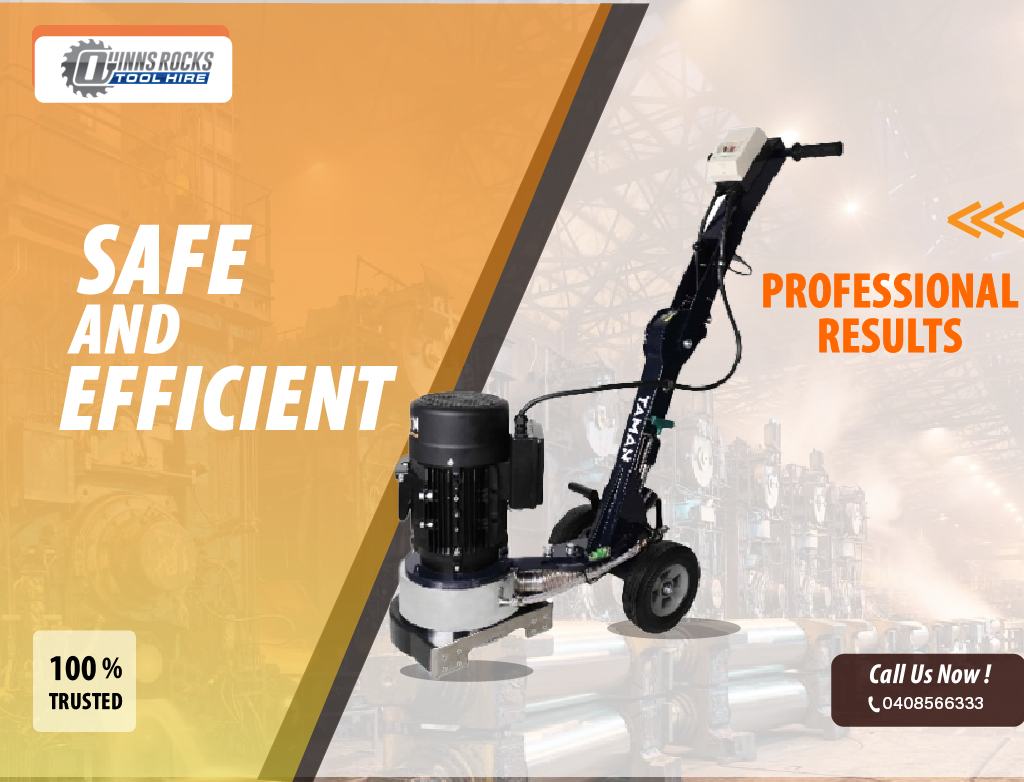
Also Check: How to Use a Concrete Floor Grinder Safely and Effectively
6. Secure Your Workpiece Properly
Never hold material by hand while using cutting or drilling tools. Instead:
- Use clamps
- Use vises
- Use brackets
- Use stands
Securing your material gives both hands full control of the tool, reducing the chance of slips or kickbacks.
7. Use Tools at the Recommended Speed and Pressure
Overloading a power tool is dangerous. Excessive pressure or force can:
- Overheat the tool
- Cause breakage
- Lead to loss of control
- Damage materials
Let the tool do the work. Operate at the recommended speed and apply steady, moderate pressure.
8. Never Remove Guards or Safety Features
Safety guards are installed for a reason. Removing or disabling them increases risk and may void the rental agreement. Examples:
- Blade guards on saws
- Trigger locks
- Anti-kickback features
- Spark deflectors
- Bit covers
Always use the tool exactly as intended by the manufacturer.
Also Check: Step-by-Step Guide: How to Use a Post Hole Auger Safely for Your Next Project
9. Avoid Working When Tired or Distracted
Fatigue, stress, or multitasking while using power tools leads to unsafe conditions. Stay focused by:
- Taking regular breaks
- Staying hydrated
- Avoid using power tools if you feel tired
- Keeping your phone away while operating
Alertness is essential for accident-free tool operation.
10. Keep Electrical Safety in Mind
Electrical hazards are common when using hired tools. Minimise risk by:
- Avoiding wet surfaces
- Using outdoor-rated extension cords
- Checking plugs for damage
- Using RCD (Residual Current Device) protection
- Never yanking cords from outlets
If the tool sparks or shocks you even once, stop immediately and return it.
11. Store and Transport Tools Safely
When not in use:
- Turn the tool off
- Unplug or remove batteries
- Allow it to cool
- Store it in a dry location
- Keep it out of reach of children
During transport, ensure the tool is properly packed to avoid damage.
Also Check: Why Quinns Rocks Is the Go-To Choice for Equipment Hire Near Me
12. Return Tools Clean and Report Issues
Before returning hired tools:
- Clean away dust, dirt, or debris
- Check for any new damage
- Report problems immediately
This helps the hiring company maintain safe equipment for all users and avoids unexpected charges for damage.
Conclusion | Safety Tips for Using Hired Power Tools
Hired power tools offer convenience, efficiency, and affordability for both DIY enthusiasts and professionals. But safety must always come first. By understanding how to choose, inspect, operate, and maintain rented tools, you significantly reduce the risk of accidents and ensure a smooth, productive work experience.
If you are renting equipment from Quinns Rocks Tool Hire, these safety tips will help you use every tool confidently and correctly. Remember—your focus, preparation, and protective measures are the best tools you have.